
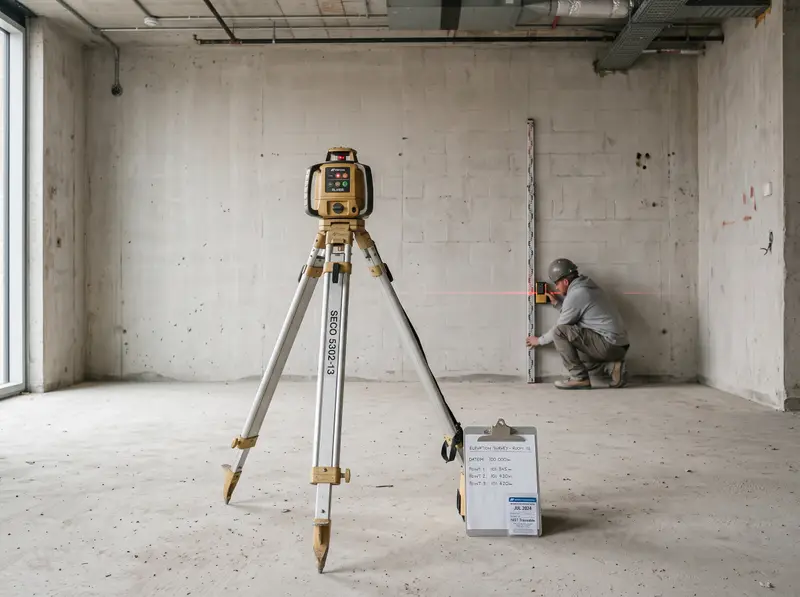
What buyers and lenders react badly to is an unknown, not a repair. A documented measurement, with the work done and the receipts kept, is far easier to sell past. Visible cracks with no paperwork behind them are not.
What an Austin buyer’s inspector will be looking at
The median house here was built in 1993 and the median value is $512,700. Age matters because it sets what kind of foundation is under the house, and so what an inspector expects to find. Value matters because it sets how much scrutiny a lender applies. Neither changes what the ground is doing, but together they decide how much a buyer will want documented.
The reasoning behind that
Two houses with identical repairs sell very differently depending on what the seller can hand over. One has an elevation survey from before the work, an invoice describing what was installed and where, and a transferable warranty. That is a house with a closed file. The other has fresh paint over the cracks. That is a house with an open question. Disclosure rules vary, and they are not this page’s to interpret. But the practical point holds everywhere: a buyer’s inspector will find the evidence of repair regardless. It is far better to be the person who produced the documentation than the person whose repair was discovered. The same logic runs the other way before a sale. Cosmetic repair that hides movement without fixing it adds a disclosure problem to a structural one. It also removes the record that would otherwise show the movement had stopped. If a sale is close, ask what the buyer’s lender will want in writing before deciding what to buy. That answer sometimes makes a measurement worth more than a repair.
Every question, in one place: Austin Foundation Repair Co questions.
Check the Austin Foundation Repair Co service area to see whether your street is covered.
Back to Austin Foundation Repair Co.